
What small business owners should know about the depreciation of property deduction Internal Revenue Service

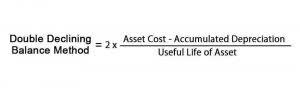
NerdWallet has engaged Atomic Invest LLC (“Atomic”), an SEC-registered investment adviser, to bring you the opportunity to open investment advisory accounts (Automated Investing Account and/or Treasury Account) with Atomic. Brokerage services for Atomic are provided by Atomic Brokerage LLC (“Atomic Brokerage”), member of FINRA/SIPC and an affiliate of Atomic, which creates a conflict of interest. See details about Atomic, in their Form CRS, Form ADV Part 2A and Privacy Policy. See details about Atomic Brokerage in their Form CRS, General Disclosures, fee schedule, and FINRA’s BrokerCheck. The other methods of calculating depreciation are the unit of production method and double declining balance method. For example, office supplies are expense items while a printer, that you would use for a longer period, is a fixed asset that depreciates every year.
Class 46 (30%)
This means in 2026, you will only be able to deduct 20% of qualifying capital expenses for rental property upfront, with the remainder depreciated over time. This shift makes claiming capital expenses for rental property more complex and necessitates advanced strategies to preserve cash flow. Learn more about what bonus depreciation is to prepare for these changes. Many organizations choose to present capitalized assets in various asset groups. It is common to segregate fixed assets on the balance sheet by asset class, such as buildings or equipment, as separate lines on the balance sheet. This better shows the composition of an organization’s fixed assets and gives readers of financial statements more visibility into how fixed assets are being used.
Property Received for Services

A company may elect to use one depreciation method over another in order to gain tax or cash flow advantages. With the straight line depreciation method, the value of an asset is reduced uniformly over each period until it reaches its salvage value. Straight line depreciation is the most commonly used and straightforward depreciation method for allocating the cost of https://www.bodacarlosytrinidad.info/2023/05/10/employee-expense-reimbursement-definition-taxes/ a capital asset. It is calculated by simply dividing the cost of an asset, less its salvage value, by the useful life of the asset. These changes in bonus depreciation rates underscore the importance of proactive tax planning for QIP. While bonus depreciation diminishes, alternative avenues such as Section 179 deductions offer opportunities to mitigate tax liabilities and optimize cash flow.
- The real estate you receive has a fair market value of $20,000.
- The addition of a leasehold improvement could make any penalty economically detrimental for the lessee to incur because of the increased value the improvement provides.
- Goodwill is the value of a trade or business based on expected continued customer patronage due to its name, reputation, or any other factor.
- Your cost also includes amounts you pay for the following items.
- The corporation first multiplies the basis ($1,000) by 40% to get the depreciation for a full tax year of $400.
- The remaining cost, if any, can be deducted over multiple years using regular depreciation methods.
Excepted Property
The employees are also allowed to take the automobiles home at night. The FMV of each employee’s use of an automobile for any personal purpose, such depreciable assets as commuting to and from work, is reported as income to the employee and James Company withholds tax on it. This use of company automobiles by employees, even for personal purposes, is a qualified business use for the company. John, in Example 1, allows unrelated employees to use company automobiles for personal purposes.
For the year of the adjustment and the remaining recovery period, you must figure the depreciation yourself using the property’s adjusted basis at the end of the year. Under MACRS, averaging conventions establish when the recovery period begins and ends. The convention you use determines the number of months for which you can claim depreciation in the year you place property in service and in the year you dispose of the property. You may have to recapture the section 179 deduction if, in any year during the property’s recovery period, the percentage of business use drops to 50% or less.
MACRS provides three depreciation methods under GDS and one depreciation method under ADS. However, a qualified improvement does not include any improvement for which the expenditure is attributable to any of the following. If you placed your property in service in 2024, complete Part III of Form 4562 to report depreciation using MACRS.

Important Rules
Under US GAAP, fixed assets are accounted for using the historical cost method. The historical cost method requires assets to be measured at the cost paid when the asset is acquired as opposed to another measure of valuation such as the fair market value. However, fixed assets should be valued at the lower of cost or market value when significant changes in market value occur. ASC 360 requires annual impairment analysis for all long-lived assets to test for significant changes in an asset’s fair market value and if the costs related to the asset are recoverable.
Basis Other Than Cost
This works well for vehicles, equipment, and other physical assets, but it cannot be used for intangible assets. The General Depreciation System (GDS) is the most Balancing off Accounts common method for calculating MACRS. If you own a building that you use to make income, you can claim the depreciation on this property. This includes rental properties as well as commercial buildings.

Method 1: De Minimis Safe Harbor (Up to $2,

See Placed in Service under When Does Depreciation Begin and End? In chapter 1 for examples illustrating when property is placed in service. Your use of either the General Depreciation System (GDS) or the Alternative Depreciation System (ADS) to depreciate property under MACRS determines what depreciation method and recovery period you use. You must generally use GDS unless you are specifically required by law to use ADS or you elect to use ADS. This is the property’s cost or other basis multiplied by the percentage of business/investment use, reduced by the total amount of any credits and deductions allocable to the property. For qualified property other than listed property, enter the special depreciation allowance on Form 4562, Part II, line 14.